

Grace Bowles graduates with a fresh take on justice
Award-winning law graduate is driven by a belief that justice can always be fairer, with more to learn.
April 24, 2026
Grace doesn’t see justice as fixed, but as something that can always be improved and better understood.
Grace didn’t set out to become a lawyer.
Growing up in Melbourne, her interests leaned towards maths and science. For a while, medicine seemed like the obvious path. Then veterinary science. It wasn’t until Year 12, sitting in a legal studies classroom with a teacher who brought the subject to life, that something shifted.
“I realised I was really interested in the criminal justice side of things,” she says. “Not just the law itself, but how it works in real life.”
That curiosity led her somewhere unexpected, back to ÌìÃÀ´«Ã½, a place she had only briefly known as a child when visiting her parents’ university.
Starting university in 2021, in the shadow of the COVID-19 pandemic, Grace took a leap, moving interstate to begin a combined Bachelor of Laws (Honours) and Bachelor of Arts, majoring in sociology and minoring in journalism.
What drew her in wasn’t just the degree, but the culture.
“There was a strong focus on social justice, and the program felt really community-focused,” she says. “It felt like a place where people genuinely cared about what they were learning and why it mattered.”
ÌìÃÀ´«Ã½ing her people, and her pace
Law is often described as demanding, and Grace’s journey was no exception. But ask her what made the biggest difference, and she doesn’t start with study techniques or late nights.
She starts with people.
“In my first semester, I made really close friends who were just as passionate,” she says. “We’d study together, bounce ideas off each other, and keep each other going.”
Those friendships became a constant, through long study sessions, mind maps covering entire walls, and the inevitable moments of overwhelm.
Because there were those moments too.
Balancing study, work, and life wasn’t always easy. But Grace learned early that staying grounded meant making space for things beyond law, friendships, routine, and looking after herself.
“It was about keeping everything else going so that I could give my best when it mattered,” she says.
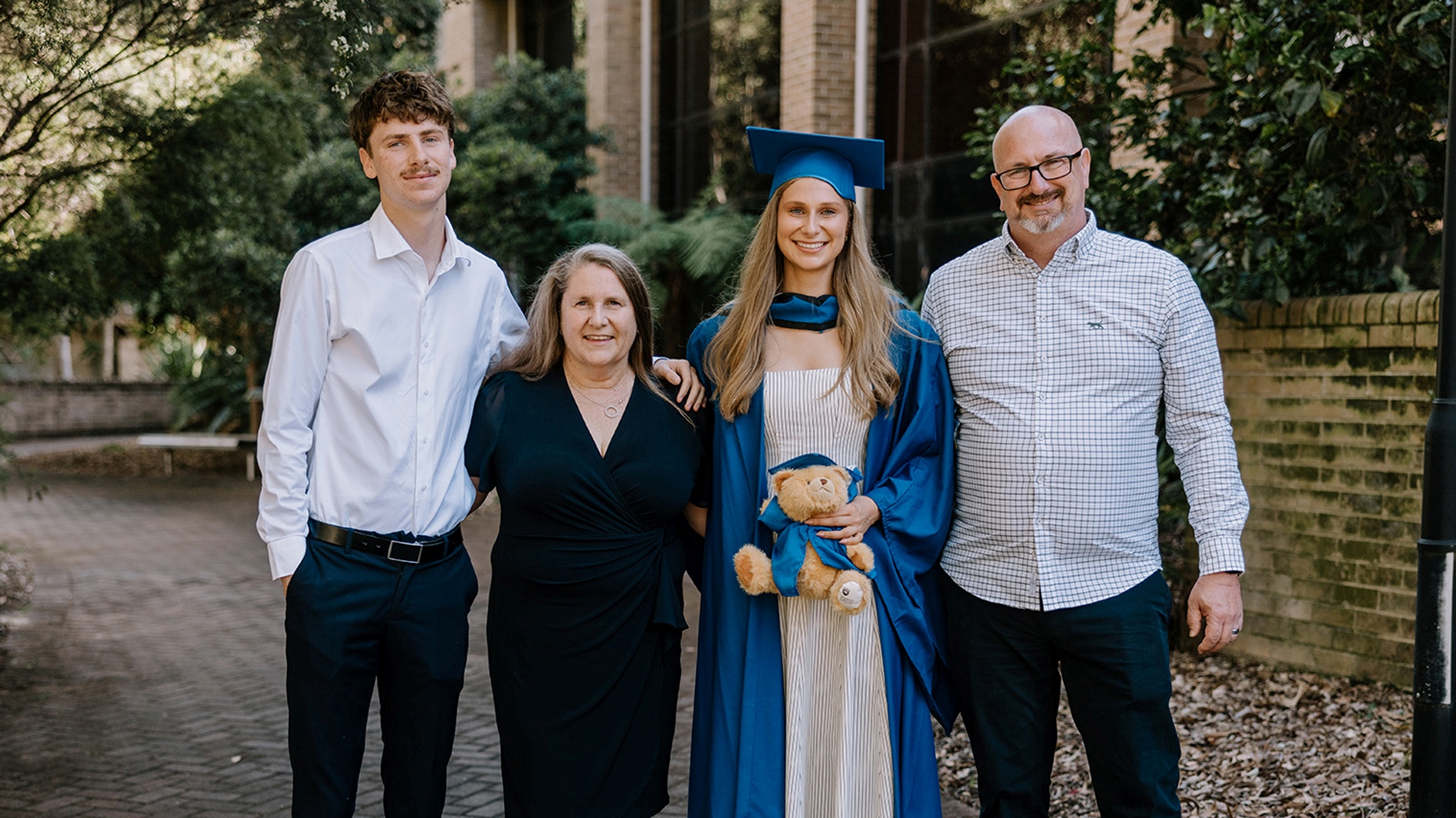
Understanding justice in a changing world
As her studies progressed, Grace’s interest in criminal law deepened, particularly in how the justice system deals with complex, human experiences.
Her Honours thesis tackled one of those complexities head-on.
Titled “Challenging Juror Misconceptions”, the research explored how misunderstandings about sexual violence, often called “rape myths”, can influence jury decisions.
At its core, the work asked a simple but important question: how can we help juries better understand the realities of trauma?
“Jurors are meant to bring common sense and community values into the courtroom,” Grace says. “But sometimes that common sense includes misconceptions.”
Her research examined whether expert evidence, such as psychologists explaining trauma responses, could help juries make more informed decisions, rather than relying solely on judicial directions at the end of a trial.
It was not just theoretical work.
Grace conducted interviews with judicial officers in the NSW District Court and ACT Supreme Court, gaining rare insight into how these issues play out in real courtrooms.
“It was incredible to speak to people with so much experience,” she says. “They could really speak to what works in practice, not just in theory.”
Learning that doesn’t stop at the classroom door
If university taught Grace the theory of law, her experiences outside the classroom showed her its reality.
Through volunteering with the Aboriginal Legal Service in ÌìÃÀ´«Ã½, she saw firsthand how complex and, at times, unequal the justice system can be.
“It really opened my eyes,” she says. “You realise very quickly that things aren’t always as clear-cut as they seem.”
It reinforced her desire to work in criminal justice, but also reshaped how she thought about fairness.
“Law deals with people, and people are complicated,” she says. “That makes everything more nuanced.”

“She’s been incredibly generous with her time and guidance,” Grace says. “It’s been such a privilege to learn from someone so passionate about what they do.”
A global perspective
In 2023, Grace took her studies overseas, completing an exchange at the University of Leeds.
There, she explored different approaches to criminal law and sociology, while also experiencing life beyond Australia.
“It was amazing,” she says. “Not just academically, but personally. You meet new people, see different systems, and come back with a broader perspective.”
Stepping into the courtroom
Now, Grace has already begun the next chapter of her journey.
In early 2026, she commenced as a Tipstaff in the Supreme Court of New South Wales, working closely with a judge and gaining a rare, behind-the-scenes view of the legal system in action.
“It’s been such an incredible experience,” she says. “You get to see everything we’ve studied come to life.”
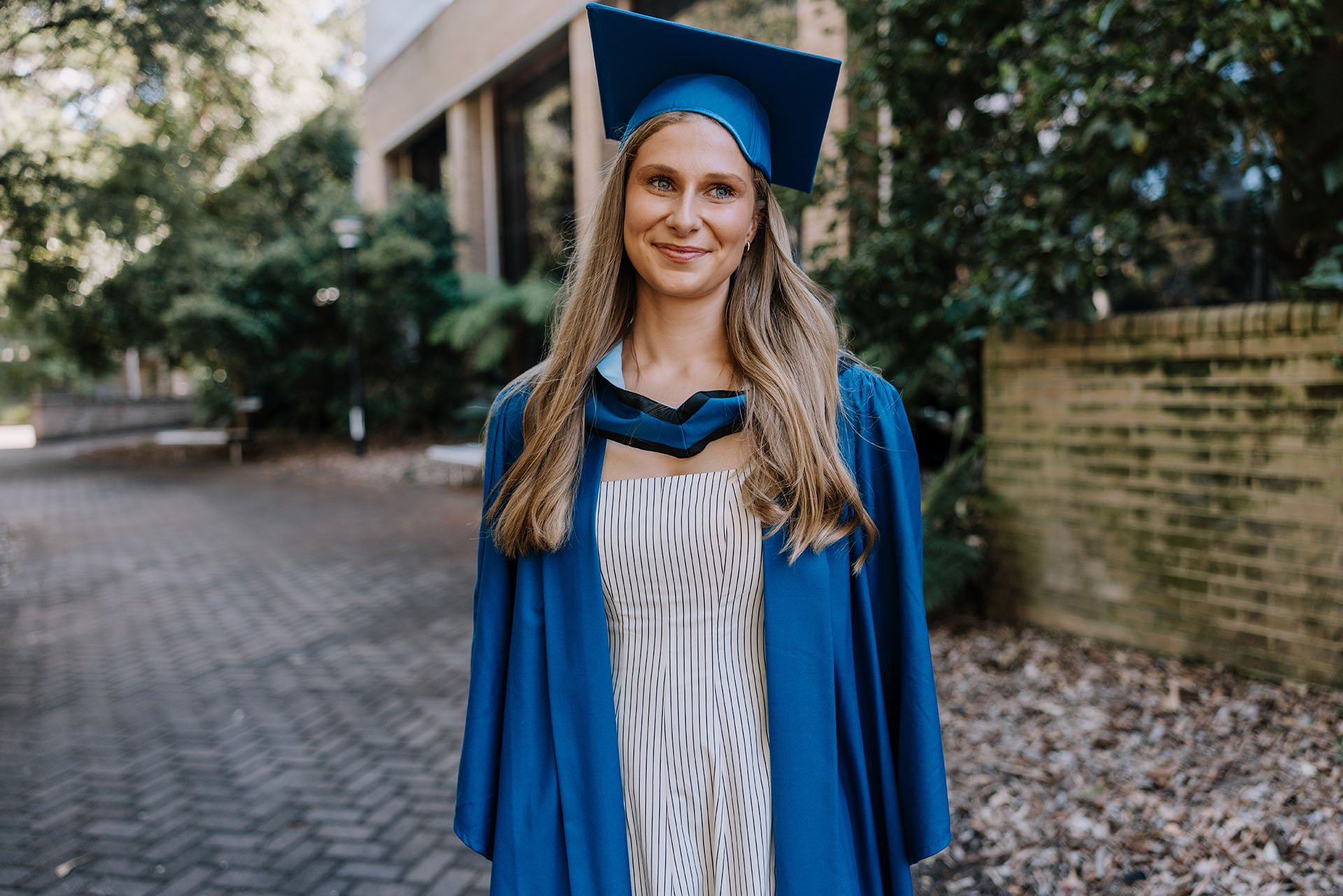
What’s next?
Despite her achievements, including being a Law Medallist and receiving multiple academic prizes, Grace speaks less about accolades and more about possibilities.
She knows where her interests lie, in criminal law and justice, but she’s open about the journey ahead.
“I’m excited to see what that looks like,” she says. “There’s still so much to learn.”
If there’s one idea that runs through her story, it’s this: that asking questions matters.
Questions about systems. About fairness. About how things could be better.
And perhaps most importantly, questions about people.
For her, the law isn’t just about rules on paper. It’s about understanding the human stories behind them, and working step by step to make those stories heard more clearly.