

February 25, 2026
High-speed rail from Sydney to Newcastle is a step closer
But what about Sydney to Melbourne?
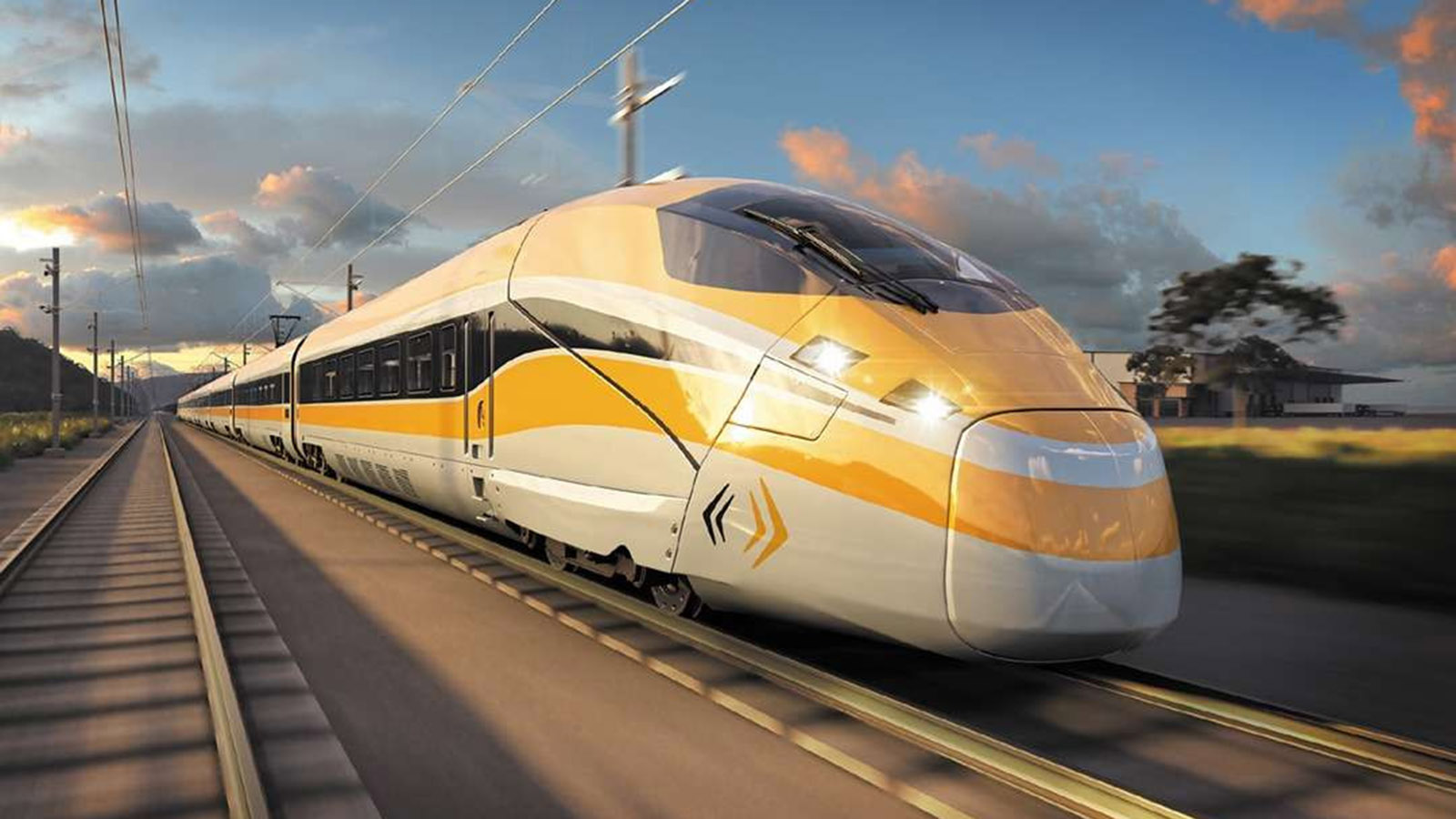
The federal government will spend towards a high-speed rail line between Newcastle and Sydney, promising the project will be “shovel ready” for a final decision on construction in 2028.
The government also released a partly redacted for the project, showing the first two stages from Newcastle to Sydney by 2039 are now estimated to cost $61.2 billion, including new trains. A further $32 billion would be needed to extend it to Western Sydney’s international airport by 2042.
The High Speed Rail Authority Newcastle–Sydney is the best place to start, with the highest population density and the busiest intercity rail route. But its vision remains that “by 2060 a high-speed rail network will connect Brisbane, Sydney, Canberra and Melbourne”.
The latest announcement follows of previous plans, , which all amounted to nothing.
Will this time be any different?
Do we have the population to justify high-speed rail?
Back when Australia started talking about high-speed rail in 1984, just two countries had trains able to travel at speeds of 250 kilometres per hour or more: Japan and France.
Today, that number has climbed to 16, including . is expected to have bullet trains running .
The main argument against fast rail here has always been population density, due to Australia’s extraordinarily low population density of just of land. That’s a fraction of the 342 people per square kilometre in Japan, home to the famous Shinkansen .
But that population density is very different along the crowded east coast.
Sydney–Newcastle is high-density
As the High Speed Rail Authority’s shows, the Newcastle, Central Coast and Sydney corridor is the mostly densely populated part of Australia, with 624 people per square kilometre.
That’s actually much higher density than Spain has with per square kilometre.
Spain opened its first high-speed rail link from Madrid to Seville back in 1992. Since then, its high-speed rail network has grown to . Yet Spain has a significantly lower than Australia.
Why start in Sydney–Newcastle?
Sydney to Newcastle is Australia’s busiest regional corridor. But its current road and rail connections are slow and need major, multi-billion-dollar upgrades – even if high-speed rail doesn’t proceed.
There are nearly 15 million annual rail trips between the two cities, some taking up to 3 hours. The M1 Pacific Motorway is often congested, with on it in 2022 alone.
The business case expanding roads would be cheaper than high-speed rail, requiring around $20–$35 billion in investment. But it would come with other costs, including causing “substantial environmental impacts, including surface disruptions to multiple national parks”, as well as doing little to address congestion and resulting in more carbon emissions.
With high-speed rail, journey times would be halved. Newcastle to Sydney would fall to about an hour, while trips from the Central Coast to Sydney or Newcastle would fall to 30 minutes.
But the proposed route is complex, involving 194km of new high-speed rail tracks, more than half of which (115km) would be through tunnels. So construction won’t be cheap or fast.
What about Sydney–Melbourne?
Infrastructure Minister Catherine King announced an extra $230 million for the project on Tuesday, taking the planning and design total to .
The minister “this is an expensive and big project”, but argued it’s better to get the design right before construction starts.
Given overseas experience, such as UK’s high-speed rail , this staged approach does make sense.
But the main question I had after reading the business case was what’s being done to work on high-speed rail from Sydney to Melbourne? It’s still the world’s sixth busiest aviation route and the existing railway is inadequate.
The longer we leave that planning, the more housing and other obstacles there will be along any future route. A good place to start would be from south-west Sydney, heading south.
How funding fights derailed past high-speed rail plans
We have got this far with high-speed rail in Australia before: nearly proceeding from design to delivery.
Back in 2000, one of the two things that spoilt the to connect Sydney to Canberra Airport was gap funding. The New South Wales government announced it wouldn’t put any money into it – then the federal government followed.
Will history repeat itself? NSW Premier Chris Minns has his government can’t fund high-speed rail “at the moment” while finishing other major infrastructure.
The difference this time may be that the current federal government has invested more than any previous government, both financially and politically.
On Tuesday, Prime Minister Anthony Albanese “significant private funding” would be crucial to the project proceeding in 2028. The discusses some of those options, including private public partnerships, plus other funding sources like developer levies.
In Japan, there’s a national agency that constructs high-speed Shinkansen lines. But they only proceed when they get support from the local prefectures (governments).
That’s the sort of clear process we’d ideally have in Australia too. If we do finally start building high-speed rail in 2028, it will be 44 years since it was first proposed.
, Honorary Principal Fellow,
This article is republished from under a Creative Commons license. Read the .
UOW academics exercise academic freedom by providing expert commentary, opinion and analysis on a range of ongoing social issues and current affairs. This expert commentary reflects the views of those individual academics and does not necessarily reflect the views or policy positions of the University of ÌìÃÀ´«Ã½.