

PACOP is a national palliative aged care program funded by the Australian Government Department of Health, Disability & Ageing working to improve resident, family & carer outcomes for palliative aged care in Australia.
PACOP for residents and families
How does PACOP work for residents, their families & aged care homes?
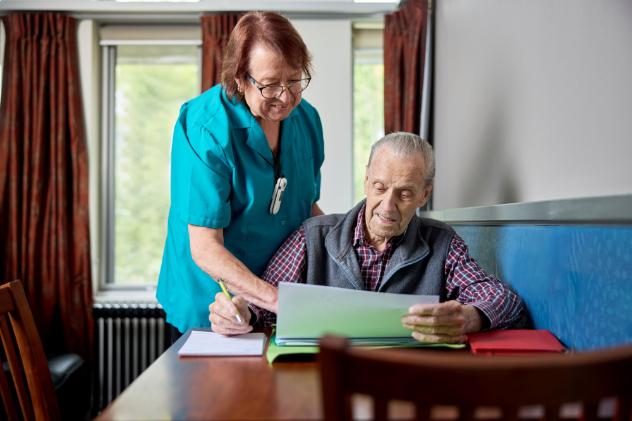
- The aged care home staff complete regular assessments to identify changing care needs, focusing on the symptoms and concerns significant to the person receiving care and their family or carer.
- These assessments help staff plan appropriate care and address the specific needs of the resident and their family or carer. They support early identification of declining health and identify when palliative care would be beneficial.
- Using a nationally standardised process supports the staff at the aged care home in identifying opportunities to discuss changing care needs with those receiving care, their families or carer.
It also supports discussions about preferences for care delivery, communication, and advance care planning. - Assessments are done more frequently for those who have identified palliative or end-of-life care needs, ensuring that any changes in care needs are responded to in a timely and supportive way, providing high-quality palliative care.
- The aged care home staff uses assessment information to communicate symptoms and concerns with residents, their family or carer, and other health professionals, such as their GP.
What happens to the assessment information?
- Aged care homes provide PACOP with de-identified assessment information every six months. It is important to note that PACOP does not receive identifiable resident details, such as names or My Aged Care numbers.
- This de-identified assessment information is held by PACOP on password protected servers located physically within UOWs secure data centre.
- PACOP analyses the assessment information and returns a report to the aged care home to identify opportunities to improve the care they provide.
- PACOP reports and support from the PACOP team help aged care homes continuously improve the quality of care they provide and demonstrate achievement of improvement over time.
- PACOP produces a national report of all assessment data received to evidence improvement across the aged care sector nationally over time.
If the person receiving care or their alternate decision maker does not want de-identified information sent to PACOP:
- Read the .
- You can talk to the aged care home manager to ask about the benefits of the assessments.
- You can also contact the PACOP team to discuss how information is managed or enquire about opting out by completing the enquiries form or call us on 02 4221 3182.
PACOP undergoes annual ethics approval for the collection and use of assessment data. PACOP has ethics approval for the secondary use of data for research. Further information on data management and use can be found here: