UOW Researchers
Research Partners
- CSIRO
- NSW Government - NSW Digital Infrastructure for Energy Flexibility (DIEF) project
Overview
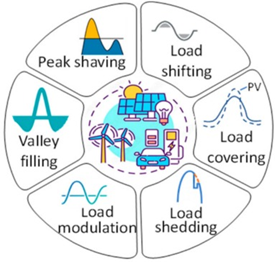
Actions to progress towards achieving net-zero emissions in Australia and globally have seen the onset of renewable energy technologies in residential, commercial and industrial buildings. However, the intermittent nature of renewable energy generated can cause grid instability. Demand flexibility is being introduced as a strategy to accommodate for more renewable energy technologies such as solar and wind farms. Buildings, in particular, can become active participants by reducing or shifting its power consumption in response to the needs of the electrical grid.
At the team at the Sustainable Buildings Research Centre (SBRC) are working alongside CSIRO and more than 50 researchers from international institutions to develop, characterise and turn demand flexibility into reality. Through the deployment of a digital-grid infrastructure, five megawatts of flexible energy will be unlocked across 200 non-residential buildings. This would allow buildings to better match their energy use to times of the day when renewable energy is abundant, helping reduce costs, lower emissions and improve energy reliability.
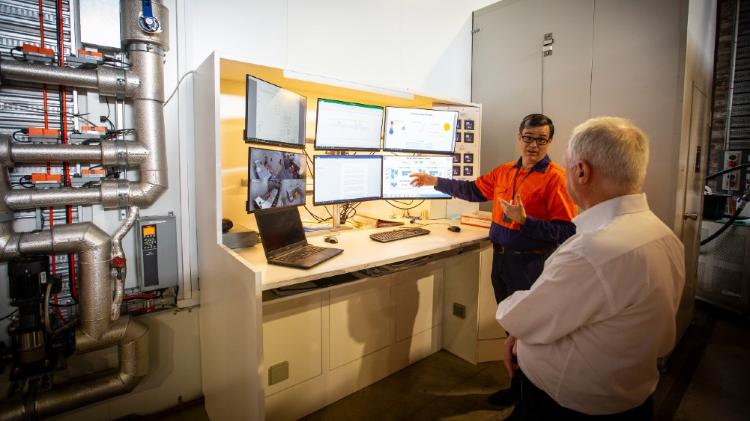
To explore how this works, the team is using buildings on the ÌìÃÀ´«Ã½ and Innovation Campus, as Living Laboratories to run tests. With sensors and control systems in place, a series of experiments are run to see how heating and cooling systems in buildings could respond to energy demands in smarter ways. The rich data collected from these tests offers deep insights into how building systems behave, revealing the underlying mechanisms that make demand flexibility work.
In parallel, the team has developed virtual models of buildings, where they could simulate different scenarios and test strategies without disrupting day-to-day operations.
Together, the experimental and digital work form a powerful toolkit for identifying practical, scalable flexibility solutions.